
Now It Gets Interesting


In our first note of the year, we said patience would be required as the world worked through high inflation and tightening monetary conditions. We suggested that the last 20 years have conditioned investors to assume economic events happen quickly and resolve quickly. We cautioned that this time may be different from the recent past—that this time, it might take longer to work excesses out of the system and return to a more normal level of inflation.
Over the past year, many have worried the aggressive hiking cycle by central banks would push us into a recession. Well, it has been one year, and no signs of a recession are in sight. In a recent Bank of America survey, most global fund managers think we will now have a soft landing or no landing at all. Perhaps they think we are in the clear because the central banks have been aggressive, and nothing has happened yet.
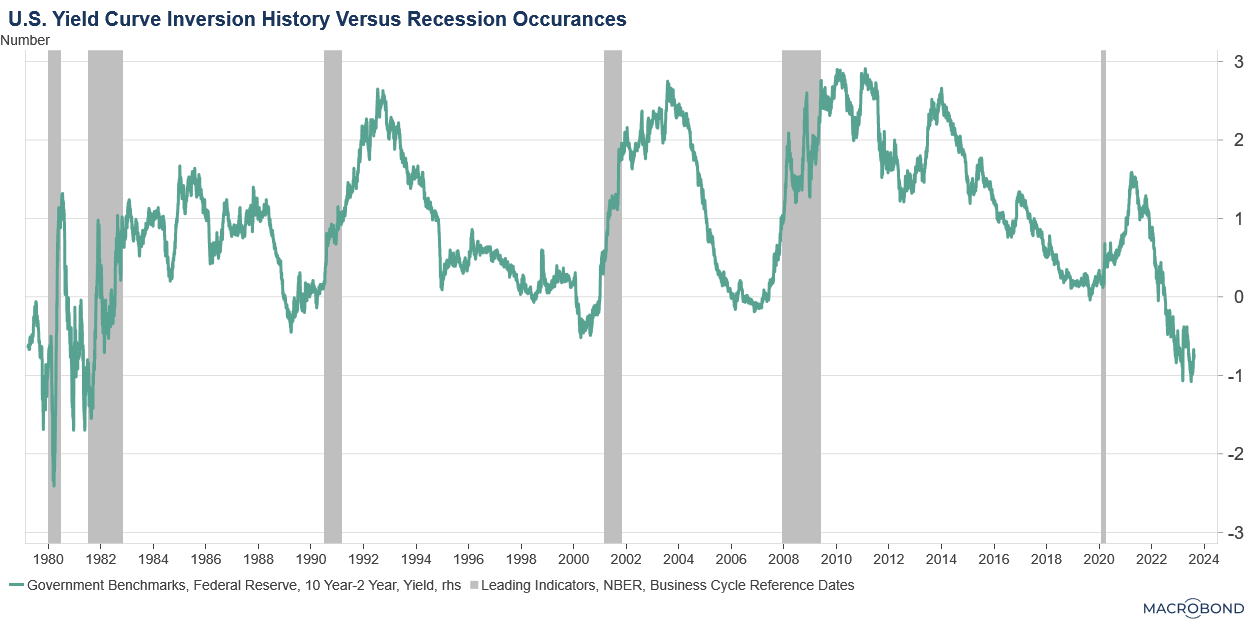
The above two charts show us it is optimistic to assume that, since we haven’t had a recession yet, we won’t have one. In fact, the data suggest that a recession was not a high probability until now.
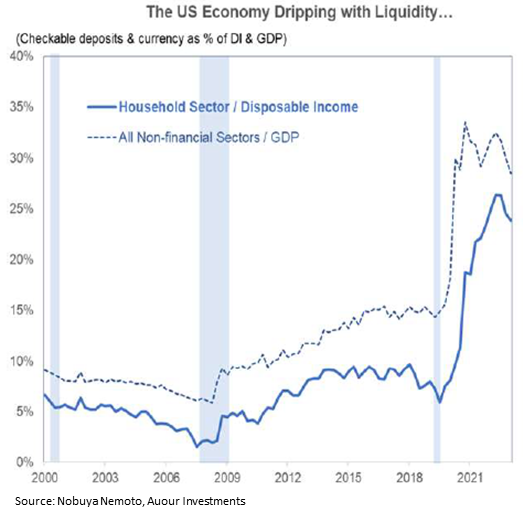
It is only now that we appear at the time of greatest susceptibility to a recession, based on history. So, is now the time to be scared and highly defensive? Our risk signals do not suggest anything is imminent, which explains why we sit with little dry powder within our investment strategies. We think there are some fundamental reasons why our risk measures are constructive.
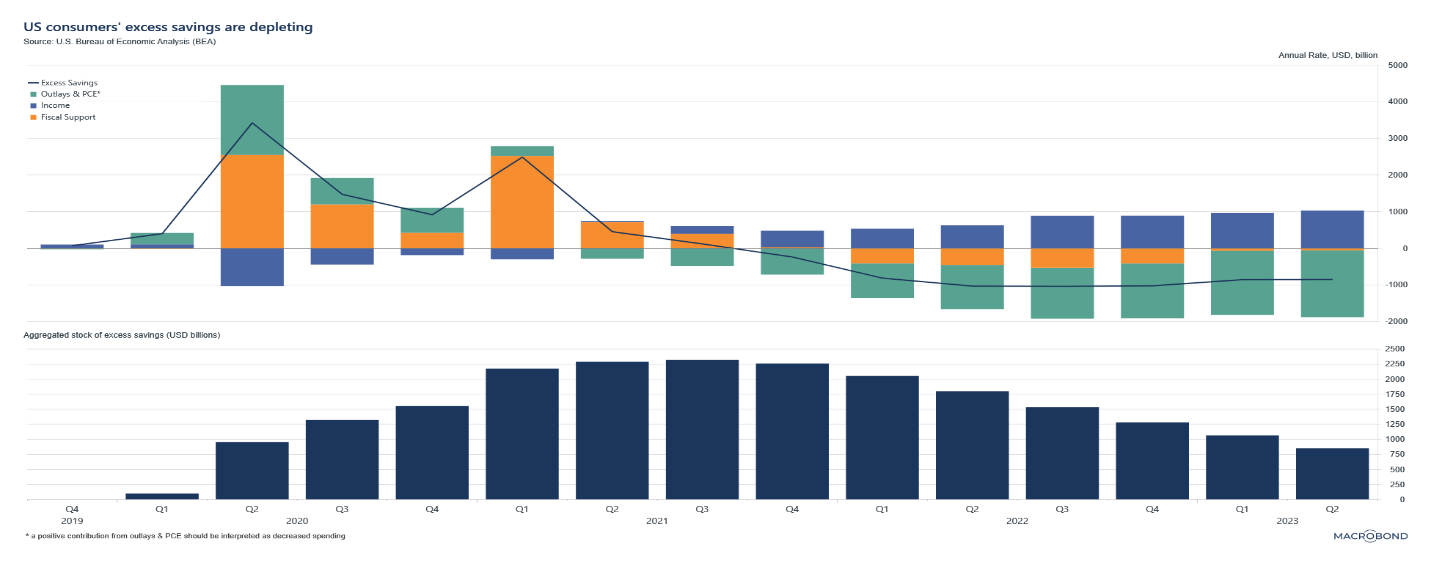
Let's start by looking at the savings rate in the U.S. economy. The adjacent graph illustrates cash relative to the gross domestic product in the economy. Pandemic-related stimulus efforts markedly increased savings, aiding consumer spending and economic growth. Though the amount of extra savings has diminished in the past few quarters, it remains historically elevated. This indicates that consumer spending might remain robust as individuals draw down these additional savings. Considering our economy's strong reliance on consumption, it would not be surprising to see robust economic performance until the savings level reverts to its historical norm.
The nearby chart shows the relationship between unemployment and the current demand for labor. Known as the Beveridge Curve, the chart plots the job vacancy rate (job openings as a percentage of all jobs) on the vertical axis and the unemployment rate on the horizontal axis. The light gray grouping of data points depicts the period after the pandemic when we experienced relatively high job vacancy levels, with high levels of unemployment. During that time, there was a mismatch between those looking for work and available jobs, causing the curve to push out compared to more normal times (depicted by the grouping of points in blue). The dark gray dots are nearly vertical, showing the change in job openings has not yet impacted unemployment. If we are moving back to a more normal environment, it could be argued we will need to see continued declines in job openings before we see any impact on unemployment. And with little job loss, it would be difficult to see a strong headwind to consumer spending and economic growth.
The above commentary highlights several reasons why we have yet to experience the economic contraction many have been anticipating. But, just because we haven’t experienced a recession yet does not mean one will not occur. We have often said that at Auour, we aim to go around economic storms by holding higher levels of cash. Earlier in the year, we mentioned that we were pivoting back into the market, riding the edge of the storm. We continue on that path, watching for darker clouds before we move into a deeper level of defensiveness.